T-cell therapy offers cancer cure
Rare white blood cells in the immune system known as T-cells could be programmed to stop cancers forming. Dubbed a “living drug” treatment, T-cells would seek and destroy cancerous tumour cells
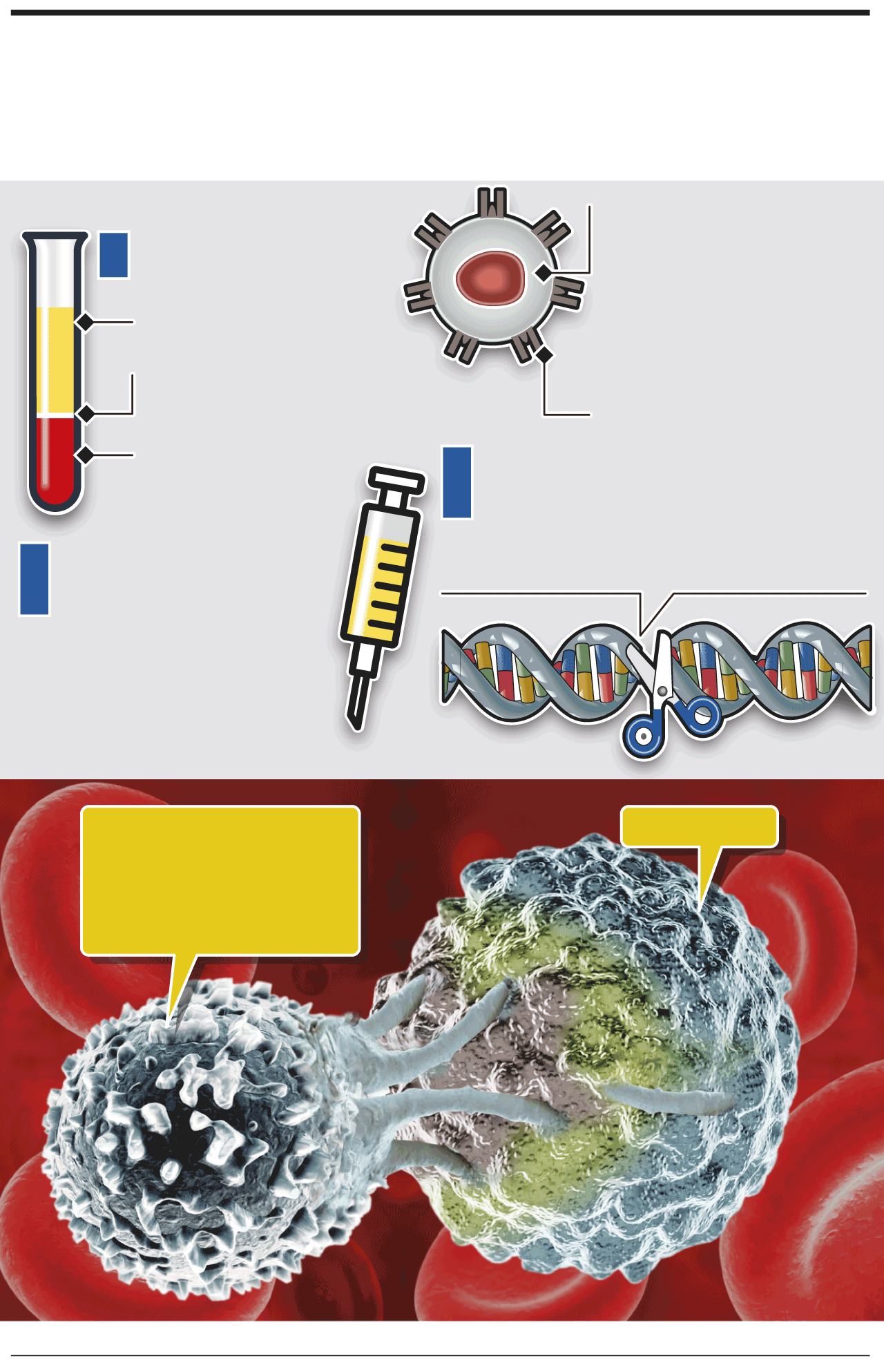
How T-cell therapy works
T-cells: Cannot recognize cancer cells as foreign intruders as they can with other forms of infection. Cells need to be “specially trained”
T-cells are extracted from patient’s blood
1
Plasma (55%)
White blood cells and platelets (<1%)
Receptors
Red blood cells (44%)
T-cell engineering: Synthetic genes are inserted into T-cell DNA. Genes enable receptors projecting from cell wall to identify protein called CD19
2
Engineered T-cells are returned to patient intravenously. Receptors activate
T-cells, instructing them to attack cancerous cells that contain CD19
3
T-cell replicates itself and recruits other parts of immune system to fight cancer
Cancer cell
Sources: AAAS, Vita-Salute San Raffaele University
© GRAPHIC NEWS
T-cell therapy offers cancer cure
Rare white blood cells in the immune system known as T-cells could be programmed to stop cancers forming. Dubbed a “living drug” treatment, T-cells would seek and destroy cancerous tumour cells
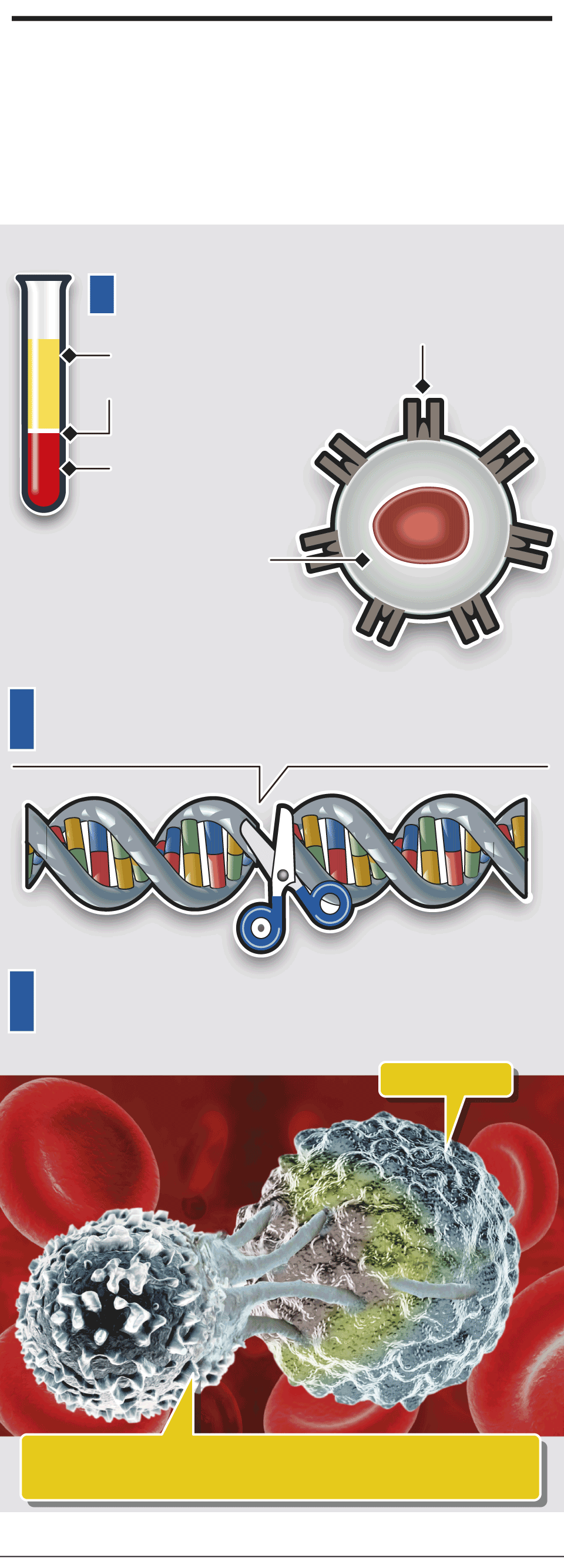
How T-cell therapy works
T-cells are extracted from patient’s blood
1
Receptors
Plasma (55%)
White blood cells and platelets (<1%)
Red blood cells (44%)
T-cells: Cannot recognize cancer cells as foreign intruders as they can with other forms of infection. Cells need to be “specially trained”
T-cell engineering: Synthetic genes are inserted into T-cell DNA. Genes enable receptors projecting from cell wall to identify protein called CD19
2
Engineered T-cells are returned to patient intravenously. Receptors activate T-cells, instructing them to attack cancerous cells that contain CD19
3
Cancer cell
T-cell replicates itself and recruits other parts of immune system to fight cancer
Sources: AAAS, Vita-Salute San Raffaele University
© GRAPHIC NEWS
T-cell therapy offers cancer cure
Rare white blood cells in the immune system known as
T-cells could be programmed to stop cancers forming. Dubbed a “living drug” treatment, T-cells would seek and destroy cancerous tumour cells
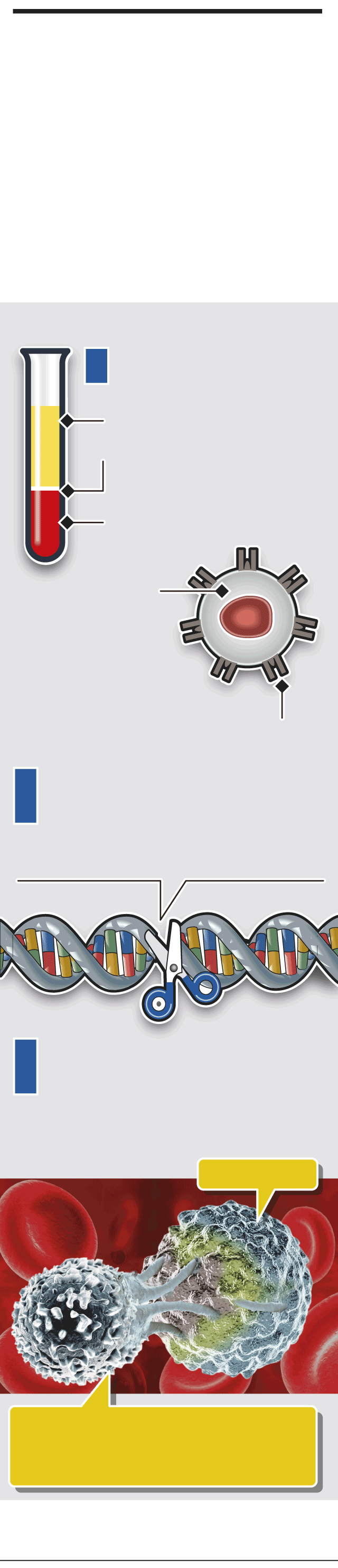
How T-cell therapy works
T-cells are extracted from patient’s blood
1
Plasma (55%)
White blood cells and platelets (<1%)
Red blood cells (44%)
T-cells: Cannot recognize cancer cells as foreign intruders as they can with other forms of infection. Cells need to be “specially trained”
Receptors
T-cell engineering: Synthetic genes are inserted into T-cell DNA. Genes enable receptors projecting from cell wall to identify protein called CD19
2
Engineered T-cells are returned to patient intravenously. Receptors activate T-cells, instructing them to attack cancerous cells that contain CD19
3
Cancer cell
T-cell replicates itself and recruits other parts of immune system to fight cancer
Sources: AAAS, Vita-Salute San Raffaele University
© GRAPHIC NEWS