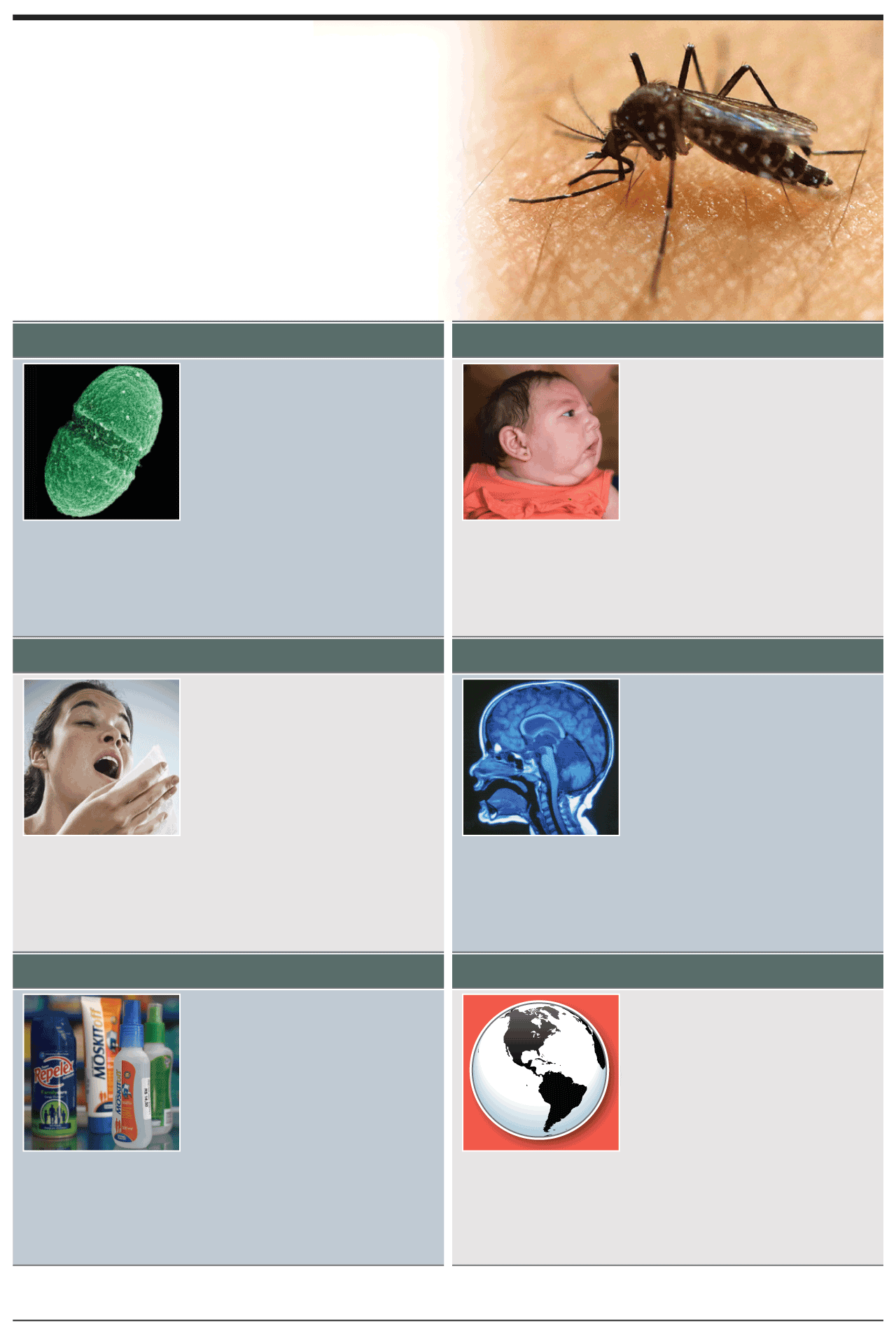
Key facts: Zika virus

The Zika virus, a mosquito-borne illness that may be linked to serious birth defects, was first identified in Uganda in 1947. Previous outbreaks were confined to a few small areas in Africa, Asia and the Pacific Islands, but the disease is now spreading rapidly in Latin America and the Caribbean

TRANSMISSION

MICROCEPHALY

Primarily through bite

of infected Aedes

mosquito – which also

spreads dengue and

yellow fever. Evidence

suggests that virus

Virus suspected of

causing brain defect

in babies, resulting in

reduced head size.

Affected children face

learning disabilities or

may also be transmitted by blood

transfusion, sexual contact, or from

mother to foetus during pregnancy,

but these instances are rare

death if brain is very underdeveloped.

Microcephaly cases in Brazil have

surged from average of 163 per year

to almost 4,000 since October 2015

SYMPTOMS

GUILLAIN-BARRE SYNDROME

Include fever, rash,

joint pain, red eyes

(conjunctivitis) and

headache. About

one in five people

thought to develop

Rare disorder in

which body’s immune

system attacks part

of nervous system,

causing weakness

and sometimes

symptoms – illness often mild, lasting

from two to seven days. Most people

fully recover without serious

complications. Deaths are rare

paralysis. Most patients recover,

but syndrome can be deadly. Cases

linked to Zika have been reported

in Brazil and French Polynesia

TREATMENT

TRAVEL ADVICE

No vaccine or antiviral

medicine available.

Patients advised to

rest and drink plenty

of fluids. Prevention

entails avoiding

CDC recommends

that pregnant women

postpone travel to

areas where Zika is

spreading locally.

List includes 20 Latin

contact with mosquitoes. Health

officials recommend covering up,

using insect repellent and keeping

windows closed or screened

American and Caribbean countries –

as far north as Mexico – plus Samoa

and Cape Verde. Northeastern Brazil

hardest hit by virus

Sources: Centres for Disease Control and Prevention (CDC), WHO, wire agencies

Pictures: AP, Wikimedia, Flickr/Tina Franklin, Getty Images, Newscom

© GRAPHIC NEWS
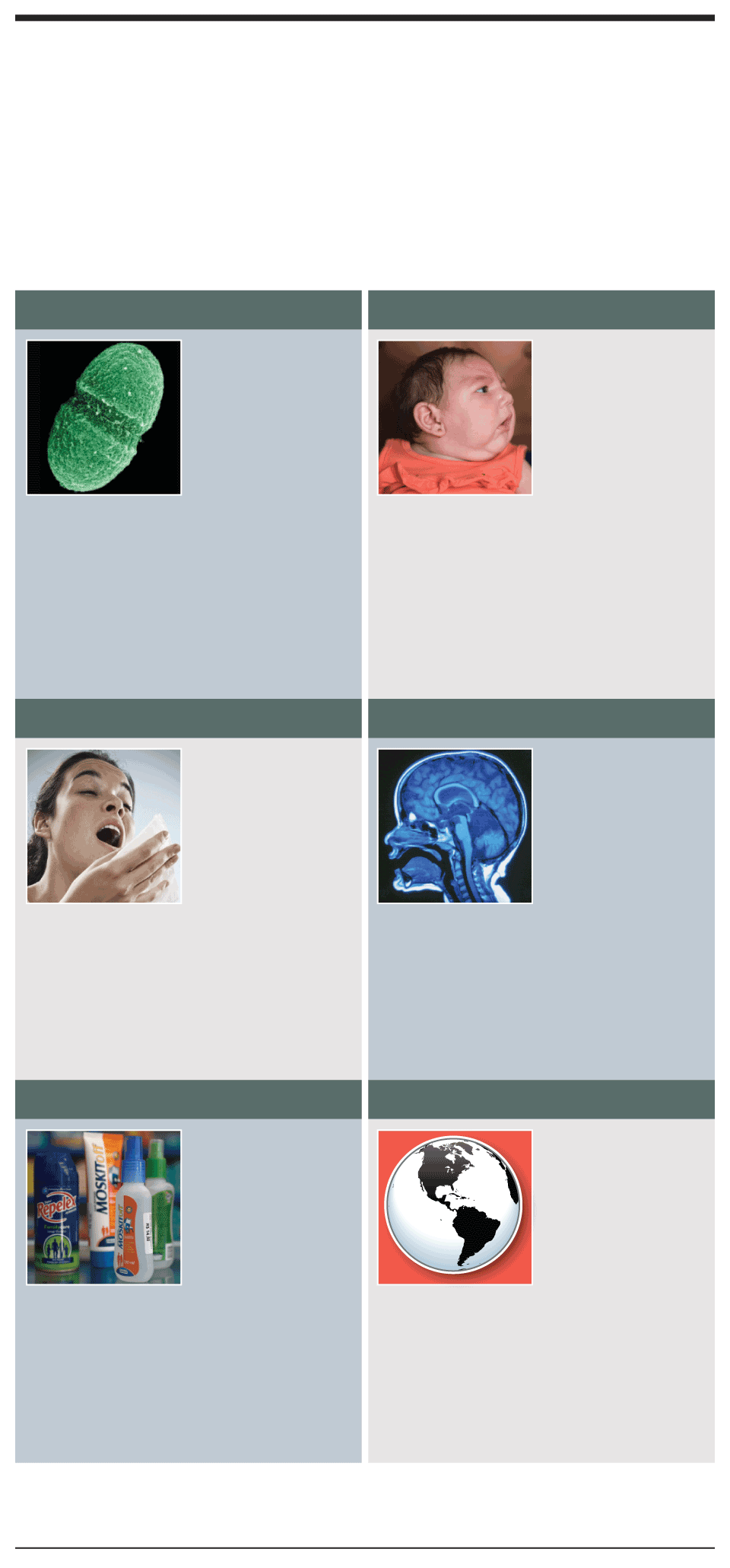
Key facts: Zika virus

The Zika virus, a mosquito-borne illness that may be linked to serious birth defects, was first identified in Uganda in 1947. Previous outbreaks were confined to a few small areas in Africa, Asia and the Pacific Islands, but the disease is now spreading rapidly in Latin America and the Caribbean

TRANSMISSION

MICROCEPHALY

Primarily

through bite of

infected Aedes

mosquito –

which also

spreads

Virus may

cause brain

defect in

babies, leading

to reduced

head size.

dengue and yellow fever.

Evidence suggests that virus

may also be transmitted by

blood transfusion, sexual

contact, or from mother to

foetus during pregnancy,

but these instances are rare

Affected children face learning

disabilities or death if brain is

very underdeveloped.

Microcephaly cases in Brazil

have surged from average of

163 per year to almost 4,000

since October 2015

SYMPTOMS

GUILLAIN-BARRE SYNDROME

Include fever,

rash, joint pain,

red eyes

(conjunctivitis)

and headache.

About one in

Rare disorder

in which

body’s immune

system attacks

part of nervous

system,

five people thought to develop

symptoms – illness often mild,

lasting from two to seven

days. Most people fully

recover without serious

complications. Deaths are rare

causing weakness and even

paralysis. Most patients

recover, but syndrome can be

deadly. Cases linked to Zika

have been reported in Brazil

and French Polynesia

TREATMENT

TRAVEL ADVICE

No vaccine or

antiviral drugs

available.

Patients

advised to

rest and drink

CDC advises

that pregnant

women avoid

travel to areas

where Zika is

spreading

plenty of fluids. Health officials

recommend avoiding contact

with mosquitoes by covering

up, using insect repellent and

keeping windows closed or

screened

locally. List includes 20 Latin

American and Caribbean

countries – as far north as

Mexico – plus Samoa and

Cape Verde. Northeastern

Brazil hardest hit by virus

Sources: Centres for Disease Control and Prevention (CDC),

WHO, wire agencies. Pictures: AP, Wikimedia,

Flickr/Tina Franklin, Getty Images, Newscom

© GRAPHIC NEWS

Key facts: Zika virus

The Zika virus, a mosquito-borne illness that may be linked to serious birth defects, was first identified in Uganda in 1947. Previous outbreaks were confined to a few small areas in Africa, Asia and the Pacific Islands, but the disease is now spreading rapidly in Latin America and the Caribbean

TRANSMISSION

Primarily through bite

of infected Aedes

mosquito – which also

spreads dengue and

yellow fever. Evidence

suggests that virus

may also be transmitted by blood

transfusion, sexual contact, or from

mother to foetus during pregnancy,

but these instances are rare

SYMPTOMS

Include fever, rash,

joint pain, red eyes

(conjunctivitis) and

headache. About

one in five people

thought to develop

symptoms – illness often mild, lasting

from two to seven days. Most people

fully recover without serious

complications. Deaths are rare

TREATMENT

No vaccine or antiviral

medicine available.

Patients advised to

rest and drink plenty

of fluids. Prevention

entails avoiding

contact with mosquitoes. Health

officials recommend covering up,

using insect repellent and keeping

windows closed or screened

MICROCEPHALY

Virus suspected of

causing brain defect

in babies, resulting in

reduced head size.

Affected children face

learning disabilities or

death if brain is very underdeveloped.

Microcephaly cases in Brazil have

surged from average of 163 per year

to almost 4,000 since October 2015

GUILLAIN-BARRE SYNDROME

Rare disorder in

which body’s immune

system attacks part

of nervous system,

causing weakness

and sometimes

paralysis. Most patients recover,

but syndrome can be deadly. Cases

linked to Zika have been reported

in Brazil and French Polynesia

TRAVEL ADVICE

CDC recommends

that pregnant women

postpone travel to

areas where Zika is

spreading locally.

List includes 20 Latin

American and Caribbean countries –

as far north as Mexico – plus Samoa

and Cape Verde. Northeastern Brazil

hardest hit by virus

Sources: Centres for Disease Control and

Prevention (CDC), WHO, wire agencies.

Pictures: AP, Wikimedia,

Flickr/Tina Franklin,

Getty Images, Newscom

© GRAPHIC NEWS