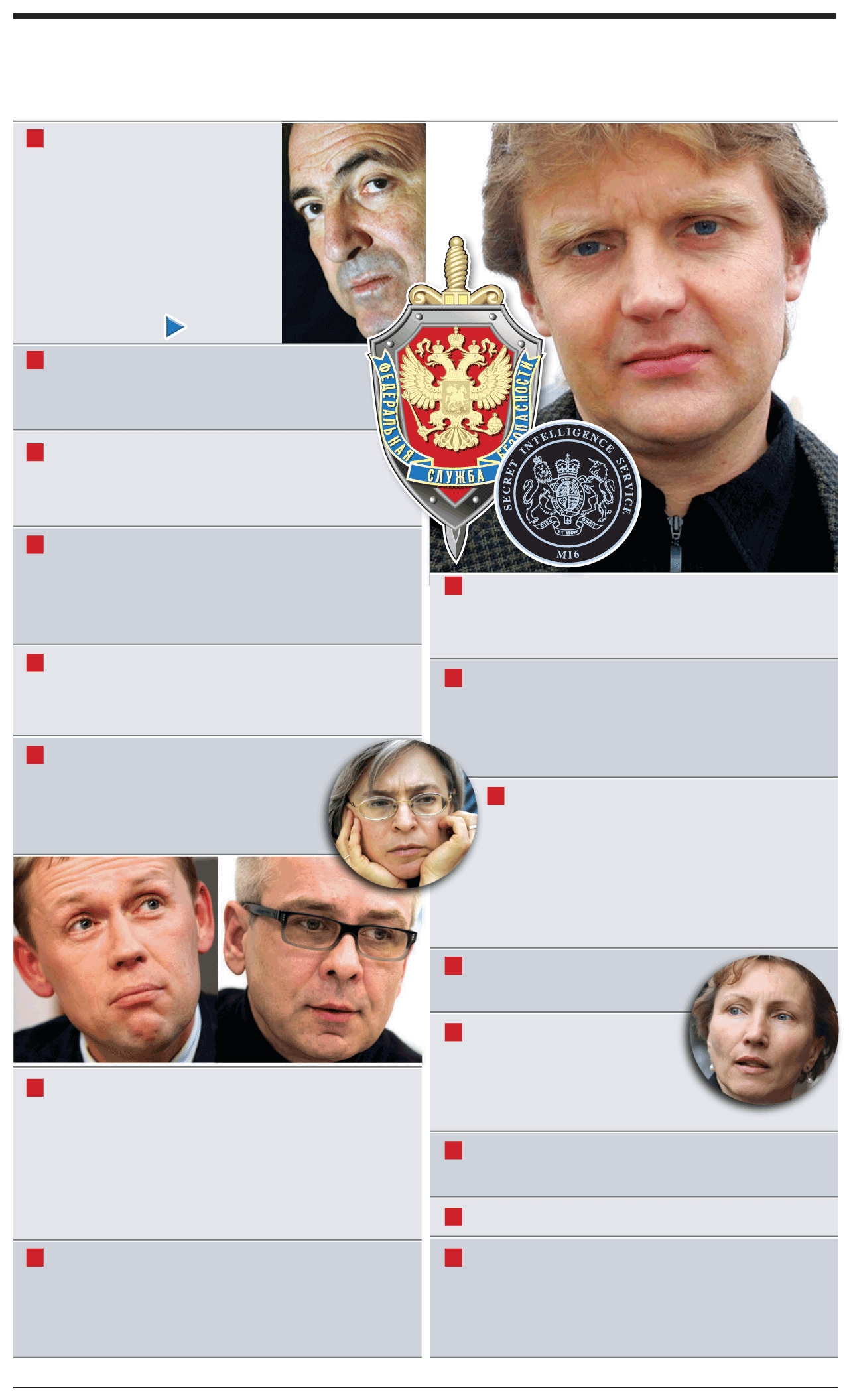
Putin “probably” behind
Litvinenko murder
1998:
Russian agent
Alexander Litvinenko
claims at Moscow news
conference that FSB
instructed him to kill
high-profile Russian
oligarch
Boris
Berezovsky
1999:
Litvinenko jailed for
nine months on charges of
abuse of office within FSB
2000:
Flees Russia with help
of Berezovsky, gains political
asylum in Britain
Alexander
Litvinenko
2002:
Co-writes book accusing
FSB of carrying out 1999 apartment
block bombings that killed over 300
people – blamed on Chechen rebels
May 2007:
UK prosecutors decide
Lugovoi should face trial for
murder of Litvinenko
2003:
Litvinenko recruited by
Jul:
Moscow refuses extradition
British intelligence service MI6 as
paid informant on organised crime
request for Lugovoi. UK announces
expulsion of four Russian diplomats.
2006:
Begins investigating
Moscow responds in kind
assassination of journalist
May-Jun 2013:
Inquest into
Anna Politkovskaya –
Litvinenko’s death delayed as
coroner decides public inquiry
would be preferable, giving
it power to hear some
evidence in secret
long-term critic of Kremlin
Jul:
UK Government
rules out public inquiry
Jan 2014:
Litvinenko’s widow
Marina
in High Court
Nov 1, 2006:
Litvinenko meets
fight to force public inquiry
Russian associates
Andrei Lugovoi
(left) and
Dmitry Kovtun
at London
Feb:
High Court overrules Home
hotel. Litvinenko falls ill that night
and is admitted to hospital three
days later
Office decision not to hold inquiry
Jan 2015:
Public inquiry begins
Nov 23:
Litvinenko dies in
Jan 21, 2016: Inquiry concludes
intensive care – death attributed
to radioactive polonium-210
administered in cup of tea
“strong probability” that FSB
directed killing, and President
Putin “probably approved” plan
Source: Wire agencies
Pictures: Associated Press, Getty Images
© GRAPHIC NEWS
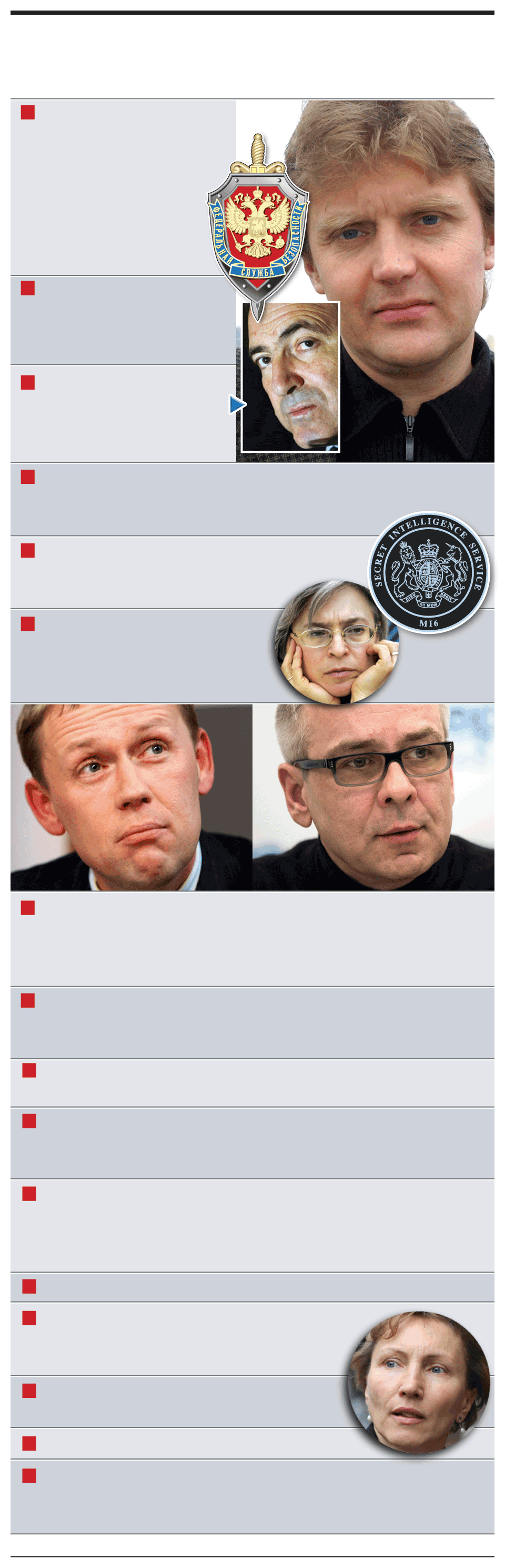
Putin “probably” behind
Litvinenko murder
1998:
Russian agent
Alexander Litvinenko
claims at Moscow news
conference that FSB
instructed him to kill
high-profile Russian
oligarch
Boris
Berezovsky
1999:
Litvinenko
jailed for nine months
on charges of abuse
of office within FSB
2000:
Flees Russia
with help of Berezovsky,
gains political asylum
in Britain
Alexander
Litvinenko
2002:
Co-writes book accusing FSB of carrying out
1999 apartment block bombings that killed over
300 people – blamed on Chechen rebels
2003:
Litvinenko recruited by British
intelligence service MI6 as paid
informant on organised crime
2006:
Begins investigating
assassination of journalist
Anna Politkovskaya –
long-term critic of Kremlin
Nov 1, 2006:
Litvinenko meets Russian associates
Andrei Lugovoi
(left) and
Dmitry Kovtun
at London
hotel. Litvinenko falls ill that night and is admitted
to hospital three days later
Nov 23:
Litvinenko dies in intensive care – death
attributed to radioactive polonium-210 administered
in cup of tea
May 2007:
UK prosecutors decide Lugovoi should
face trial for murder of Litvinenko
Jul:
Moscow refuses extradition request for Lugovoi.
UK announces expulsion of four Russian diplomats.
Moscow responds in kind
May-Jun 2013:
Inquest into Litvinenko’s death
delayed as coroner decides public inquiry would be
preferable, giving it power to hear some evidence
in secret
Jul:
UK Government rules out public inquiry
Jan 2014:
Litvinenko’s widow
Marina
in High Court
fight to force public inquiry
Feb:
High Court overrules Home
Office decision not to hold inquiry
Jan 2015:
Public inquiry begins
Jan 21, 2016: Inquiry concludes “strong
probability” that FSB directed killing, and
President Putin “probably approved” plan
Source: Wire agencies
Pictures: AP, Getty Images
© GRAPHIC NEWS

Putin “probably”
behind Litvinenko
murder
1998:
Russian agent
Alexander Litvinenko
claims at Moscow
news conference that
FSB instructed him
to kill high-profile
Russian oligarch
Boris Berezovsky
1999:
Litvinenko
jailed for nine months
on charges of abuse
of office within FSB
2000:
Flees Russia
with help of Berezovsky,
gains political asylum
in Britain
2002:
Co-writes book accusing
FSB of carrying out 1999 apartment
block bombings that killed over
300 people – blamed on
Chechen rebels
2003:
Litvinenko
recruited by British
intelligence service
MI6 as paid informant
on organised crime
2006:
Begins
investigating
assassination
of journalist
Anna Politkovskaya –
long-term critic of Kremlin
Nov 1, 2006:
Litvinenko meets
Russian associates
Andrei
Lugovoi
(left) and
Dmitry Kovtun
at London hotel. Litvinenko falls ill
that night and is admitted to
hospital three days later
Nov 23:
Litvinenko dies in
intensive care – death attributed
to radioactive polonium-210
administered in cup of tea
May 2007:
UK prosecutors
decide Lugovoi should face trial
for murder of Litvinenko
Jul:
Moscow refuses extradition
request for Lugovoi. UK announces
expulsion of four Russian
diplomats. Moscow responds
in kind
May-Jun 2013:
Inquest into
Litvinenko’s death delayed as
coroner decides public inquiry
would be preferable, giving it
power to hear some evidence
in secret
Jul:
UK Government rules out
public inquiry
Jan 2014:
Litvinenko’s
widow
Marina
in High Court
fight to force public inquiry
Feb:
High Court overrules Home
Office decision not to hold inquiry
Jan 2015:
Public inquiry begins
Jan 21, 2016: Inquiry
concludes “strong probability”
that FSB directed killing, and
President Putin “probably
approved” plan
Pictures: AP, Getty Images
© GRAPHIC NEWS