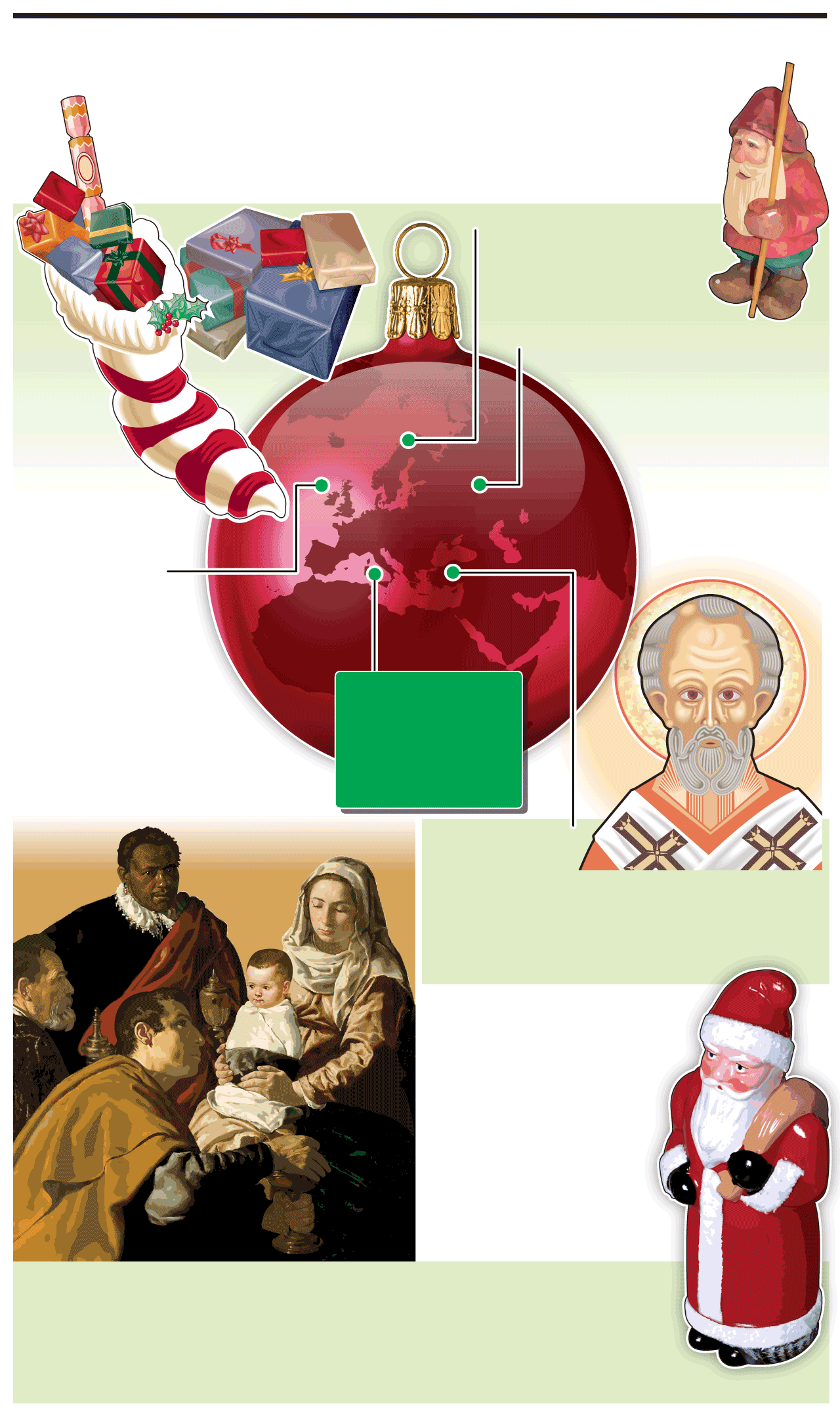
Four thousand years of festivity

Mid winter has long been a time of celebration. Ancient Egyptians and early Europeans marked the winter solstice – the rebirth of the sun – and the Romans held Saturnalia, to honour the pagan god of plenty

Jultomte/Julenisse:

Gnome delivers gifts

in goat-drawn sleigh

in Scandinavia


Babushka:

Elderly Russian

woman who refused

chance to join wise

men seeking Jesus,

delivers presents

on January 6 –

Three Kings

Day

Gift-

giving:

Custom

traced back

to Roman

Saturnalia

Evergreens:

Venerated in

northern Europe

by Druids and

Vikings as symbol

of everlasting life.

Christmas trees were

common in pagan Rome

– modern tradition began in

Germany in 15th century

La Befana: In

Italy, gift-giver

is wandering

woman similar

to Babushka

St. Nicholas:

Born around

280 AD near Myra in modern-day

Turkey. Much admired for his piety

and kindness. Patron saint of

children and sailors

Dutch settlers introduced

St. Nicholas to America

as Sinterklaas, which

later became Santa

Claus. Also known as

Father Christmas,

Pere Noel in

France, and Papa

Noel in Spanish-

speaking world

Three Kings:

Twelve days of Christmas end with Feast of

Epiphany. Legend says wise men, or Magi, followed bright

star to Bethlehem to present infant Christ with gifts of

gold, frankincense and myrrh.

Orthodox Church and

Hispanic world still celebrate Nativity on January 6

© GRAPHIC NEWS
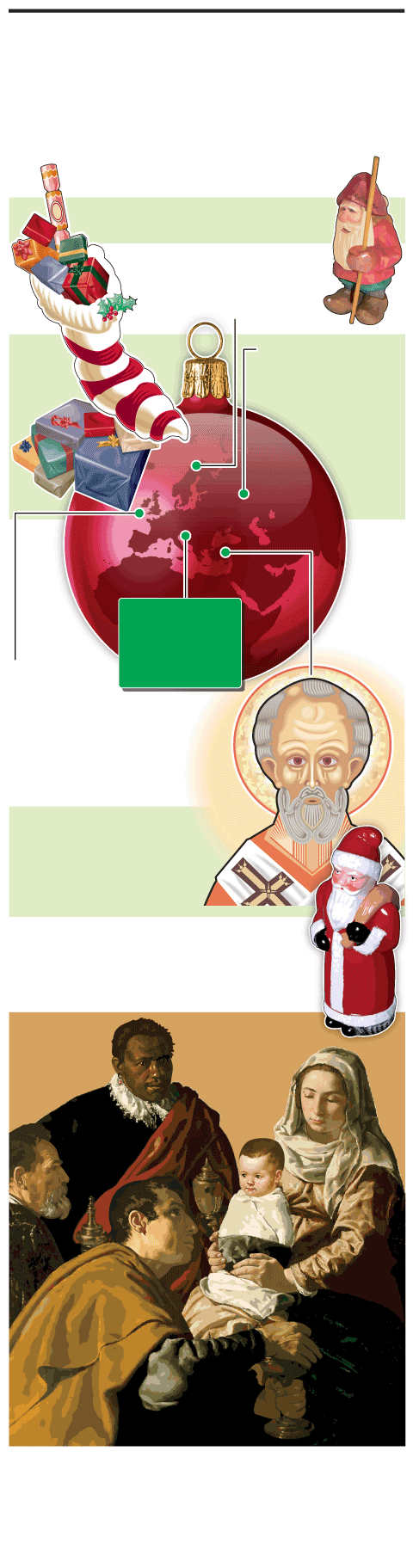
Four thousand

years of festivity

Mid winter has long been a time of celebration. Ancient Egyptians and early Europeans marked the winter solstice – the rebirth of the sun – and the Romans held Saturnalia, to honour the pagan god of plenty

Gift-giving:

Custom traced back

to Roman Saturnalia

Jultomte/Julenisse:

Gnome delivers

gifts in goat-drawn

sleigh in Scandinavia


Elderly

Russian woman who

refused chance to join

wise men seeking

Jesus, delivers

presents on

Jan 6

– Three

Kings

Day

Babushka:

La Befana: In

Italy, gift-giver

is wandering

woman similar

to Babushka

Evergreens:

Venerated in

northern Europe by

Druids and Vikings as symbol

of everlasting life. Christmas

trees were common in pagan

Rome – modern tradition began

in Germany in 15th century

St. Nicholas:

Born around


280 AD near Myra in

modern-day Turkey.

Much admired for his piety

and kindness. Patron saint

of children and sailors

Dutch settlers introduced St. Nicholas

to America as Sinterklaas, which later

became Santa Claus. Also known as

Father Christmas, Pere Noel in France,

and Papa Noel in Spanish-speaking world

Three Kings:

Twelve days of Christmas end with

Feast of Epiphany. Legend says wise men, or Magi,

followed bright star to Bethlehem to present infant

Christ with gifts of gold, frankincense and myrrh.

Orthodox Church and Hispanic world still

celebrate Nativity on January 6

© GRAPHIC NEWS

Four thousand

years of festivity

Mid winter has long been a time of celebration. Ancient Egyptians and early Europeans marked the winter solstice – the rebirth of the sun – and the Romans held Saturnalia, to honour the pagan god of plenty

Gift-giving:

Custom

traced back to Roman

Saturnalia

Jultomte/

Julenisse:

Gnome

delivers gifts

in goat-drawn

sleigh in

Scandinavia


Babushka:

Elderly Russian woman

who refused chance to join

wise men seeking Jesus,

delivers presents on

Jan 6 – Three Kings Day

La Befana: In Italy, gift-giver

is wandering woman similar

to Babushka

Evergreens:

Venerated in northern

Europe by Druids and Vikings as

symbol of everlasting life.

Christmas trees were common in

pagan Rome – modern tradition

began in Germany in 15th century

St. Nicholas:

Born around 280 AD


near Myra in modern-day Turkey.

Much admired for his piety and

kindness. Patron saint of children

and sailors

Dutch settlers introduced

St. Nicholas to America as

Sinterklaas, which later became

Santa Claus. Also known

as Father Christmas,

Pere Noel in France,

and Papa Noel in

Spanish-speaking

world

Three Kings:

Twelve days of

Christmas end with Feast of

Epiphany. Legend says wise men,

or Magi, followed bright star to

Bethlehem to present infant Christ

with gifts of gold, frankincense and

myrrh.

Orthodox Church and

Hispanic world still celebrate

Nativity on January 6

© GRAPHIC NEWS