Google’s internet balloons
to circle Earth
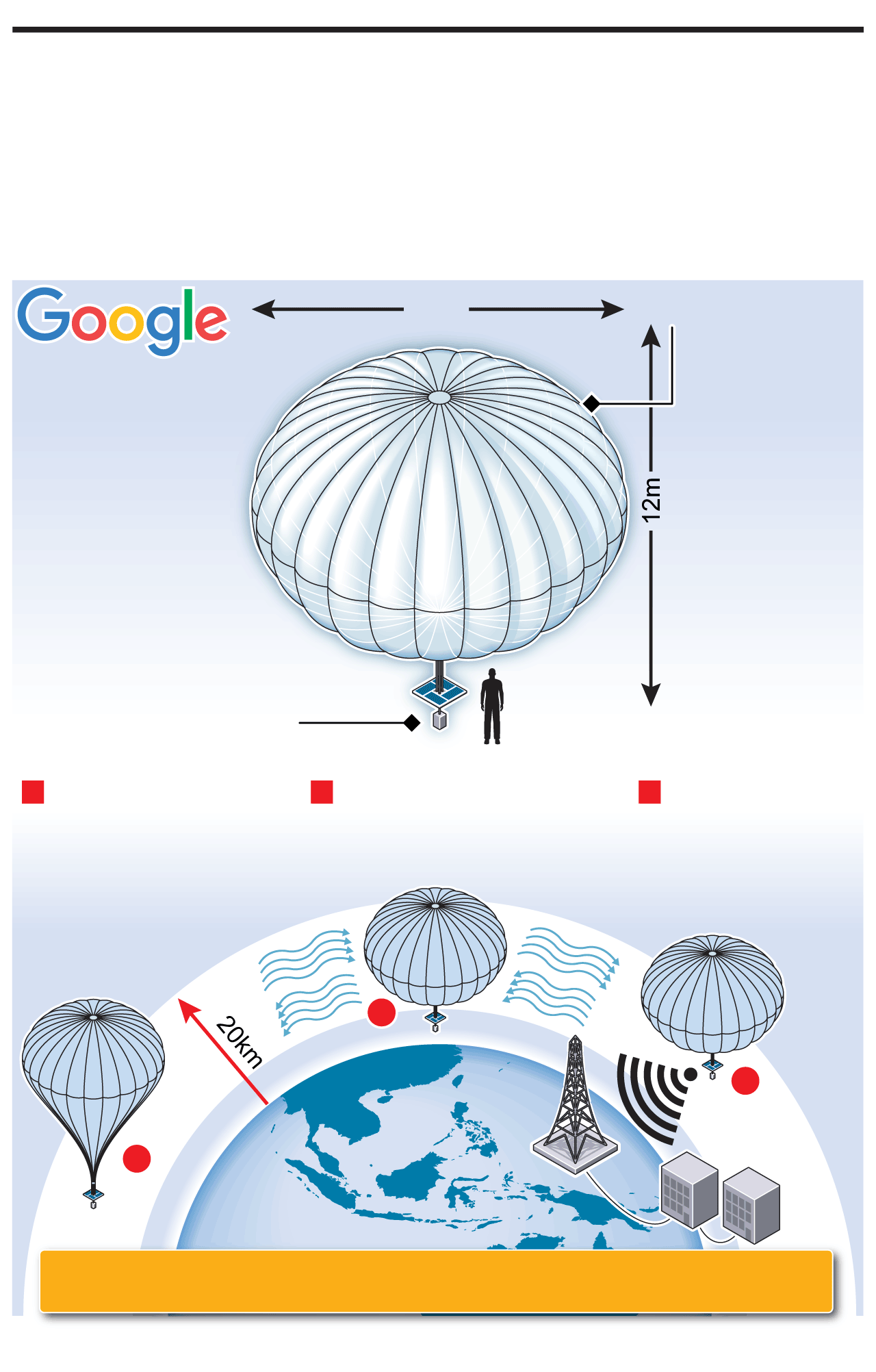
Google has teamed up with three Indonesian telecommunications companies to boost internet access in much of rural Indonesia using solar-powered helium balloons. More than 100 million people, out of the 255 million-strong population, currently have no internet access
15m
Envelope:
Tightly sealed
polyethylene
enables balloon
to last up to
187 days
PROJECT LOON
Each balloon provides
connectivity to
ground area of
40km in diameter,
using LTE wireless
communications
technology
Automated
crane, plus
two or three
people, can
launch one
balloon every
15 minutes
Payload:
Two radio
transceivers, flight
computer, and altitude
control system, all
powered by solar panels
HOW BALLOONS WORK
1
2
3
Helium-filled balloon
Software moves balloon
Internet beamed
sent into stratosphere
at altitude of around
20km, where wind
speed is relatively low
and turbulence
minimal
up and down to find layer
of wind blowing in right
direction
to connected device
at around 10 megabits
a second (3G speed)
via antennae on
ground
2
3
1
Google plans to launch 300 balloons around world to provide
coverage to New Zealand, Australia, Chile and Argentina in 2016
Source: Project Loon
© GRAPHIC NEWS
Google’s internet
balloons to circle Earth
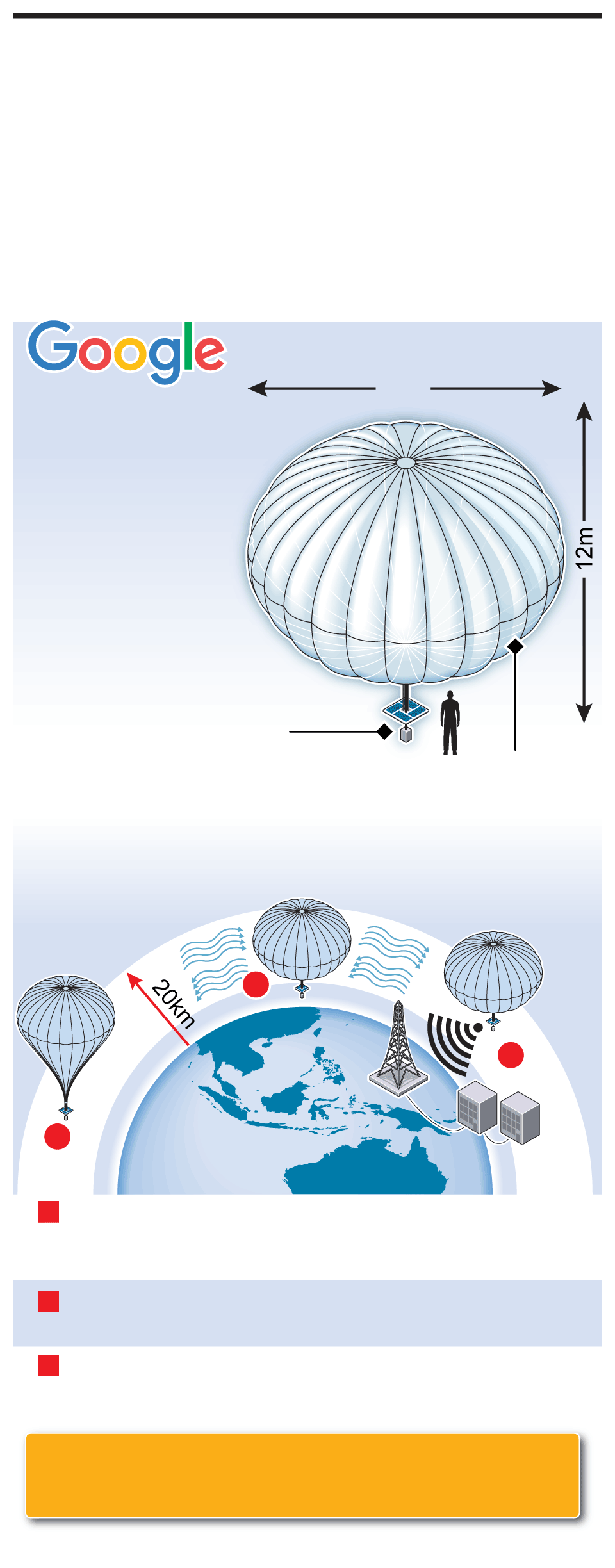
Google has teamed up with three Indonesian telecommunications companies to boost internet access in much of rural Indonesia using solar-powered helium balloons. More than 100 million people, out of the 255 million-strong population, currently have no internet access
15m
PROJECT LOON
Each balloon provides
connectivity to
ground area of
40km in diameter,
using LTE wireless
communications
technology
Payload:
Two radio
transceivers, flight
computer, and altitude
control system, all
powered by solar panels
Automated crane, plus
two or three people,
can launch one balloon
every 15 minutes
Envelope:
Tightly
sealed polyethylene
enables balloon to
last up to 187 days
3
HOW BALLOONS WORK
2
3
1
1
Helium-filled balloon sent into stratosphere at
altitude of around 20km, where wind speed is
relatively low and turbulence minimal
2
Software moves balloon up and down to find
layer of wind blowing in right direction
3
Internet beamed to connected device at
around 10 megabits a second (3G speed)
via antennae on ground
Google plans to launch 300 balloons around
world to provide coverage to New Zealand,
Australia, Chile and Argentina in 2016
Source: Project Loon
© GRAPHIC NEWS

Google’s
internet
balloons to
circle Earth
Google has teamed up with three Indonesian telecommunications companies to boost internet access in much of rural Indonesia using solar-powered helium balloons. More than 100 million people, out of the 255 million-strong population, currently have no internet access
PROJECT LOON:
Each balloon
provides connectivity to ground
area of 40km in diameter, using
LTE wireless communications
technology
Envelope:
Tightly sealed
polyethylene enables balloon
to last up to 187 days
15m
Payload:
Two radio
transceivers,
flight computer, and altitude
control system, all powered
by solar panels
HOW BALLOONS WORK
2
3
1
1
Helium-filled balloon sent into
stratosphere at altitude of 20km,
where wind speed is relatively
low and turbulence minimal
2
Software moves balloon up
and down to find layer of wind
blowing in right direction
3
Internet beamed to connected
device at around 10 megabits
a second (3G speed) via
antennae on ground
Google plans to launch
300 balloons around world
to provide coverage to New
Zealand, Australia, Chile
and Argentina in 2016
Source: Project Loon
© GRAPHIC NEWS